
Established in 1902, Big Basin Redwoods State Park holds a sacred place in California’s environmental history as the state’s oldest state park. Spanning over 18,000 acres in the heart of the Santa Cruz Mountains, its ancient coast redwoods—some standing over 300 feet tall and exceeding 2,000 years of age—have awed generations of hikers, naturalists, and local residents. However, the catastrophic CZU Lightning Complex Fire swept through the region, scorching over 97% of the park’s total acreage and destroying historic timber structures, park headquarters, visitors centers, and extensive trail infrastructure.
Far from marking an end, that event inaugurated a transformative chapter in forest management and conservation. Today, the park stands as a global baseline for ecological recovery, climate resilience, and modernized park planning. Through cooperative initiatives between California State Parks, environmental conservation organizations, and local trail groups, Big Basin is not only recovering—it is strategically expanding. For visitors and Santa Cruz Mountain residents, 2026 marks a historic milestone in witnessing an iconic landscape reinvent itself for the next century.
The NoraBella Acquisition: Securing a New Gateway
One of the most consequential developments in Big Basin’s recent history is the permanent protection and addition of the NoraBella property. Spanning 153 acres near Boulder Creek, this strategic parcel was acquired through collaborative efforts involving California State Parks, the Sempervirens Fund, and regional conservation donors.
The acquisition of NoraBella accomplishes several critical conservation goals:
- Watershed Protection: The parcel secures vital headwaters and riparian corridors feeding into the San Lorenzo River basin, safeguarding critical habitat for endangered coho salmon and steelhead trout.
- A Strategic Eastern Entrance: Situated along Highway 236 near Boulder Creek, NoraBella provides an ideal buffer and gateway zone that connects public access corridors to the Saddle Mountain area.
- Ecosystem Connectivity: Incorporating this acreage prevents habitat fragmentation, allowing wildlife species such as mountain lions, bobcats, and black-tailed deer to move unhindered across contiguous forested corridors.
By integrating NoraBella into the state park boundary, planners have ensured that future visitor infrastructure can be situated in less ecologically sensitive areas while preserving core wilderness zones for natural regeneration.
Restoration in Action: Ecological Recovery of Coast Redwoods
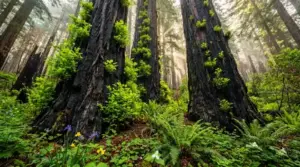 To walk through Big Basin today is to witness nature’s profound capacity for renewal. While the loss of historic wooden structures was devastating, the old-growth coast redwoods (Sequoia sempervirens) demonstrated why they have survived millennia of environmental shifts.
Thanks to their thick, tannin-rich bark and subterranean root networks, the vast majority of the ancient redwoods survived the intense thermal heat. Across the park, massive trunks are covered in thick green growth—a process known as epicormic sprouting, where dormant buds beneath the bark sprout new foliage. Meanwhile, the forest floor has experienced a surge in biodiversity. Sunlight reaching the canopy floor for the first time in centuries has spurred the growth of native ferns, wild iris, fireweed, and brush species that provide critical forage for local wildlife.
State Parks ecologists, alongside research institutions, are continually monitoring soil health, hydrology, and tree mortality. These studies are offering valuable insights into how old-growth ecosystems adapt to high-severity fires, providing a template for forest management across the Western United States.
Navigating the Park: Reopened Trails and Modern Visitor Services
For outdoor enthusiasts eager to experience the Santa Cruz Mountains, the park has systematically reopened core trails while rebuilding infrastructure with long-term climate resilience in mind. Rather than simply replacing destroyed wooden boardwalks with identical materials, engineers are utilizing fire-resistant, sustainable materials designed to withstand future climate events.
Reopened Hiking Corridors
Visitors to Big Basin can currently access several popular trail networks, including:
- The Redwood Loop Trail: This accessible, 0.6-mile flat loop offers visitors an up-close look at some of the park’s largest surviving old-growth trees, including the Mother and Father of the Forest.
- Sections of the Hollow Tree Trail: Offering a deeper hike into recovering mixed-conifer forests, providing clear views of canopy regrowth and watershed recovery.
- Saddle Mountain Access Routes: Serving as new staging areas for educational interpretive walks, ranger-led tours, and community volunteer workdays.
Updated Day-Use and Reservation Guidelines
To prevent traffic congestion along narrow mountain roads and protect fragile regenerating habitats, Big Basin operates under an updated day-use parking reservation system. Visitors planning to park at the core visitor area are encouraged to reserve their spots online in advance. This system manages daily visitor density, ensuring an uncrowded, peaceful outdoor experience while minimizing environmental impact on recovering trail shoulders.
Community Collaboration and Trail Stewardship
The massive effort required to restore Big Basin’s extensive trail network would not be possible without deep community involvement. Organizations such as the Santa Cruz Mountains Trail Stewardship (SCMTS) and the Friends of Santa Cruz State Parks have contributed thousands of volunteer hours toward clearing fallen timber, stabilizing eroded hillside slopes, and constructing sustainable trail treads.
Local volunteers, trail crews, and outdoor advocates have worked alongside state park rangers to rebuild bridges, install clear signage, and eradicate invasive plant species that threaten native flora. This grass-roots mobilization underscores the deep emotional connection that Santa Cruz County residents share with their mountain parks.
Looking Ahead: The “Reimagining Big Basin” Vision
The ongoing rebuilding effort is guided by the comprehensive Reimagining Big Basin vision—a long-term master planning framework developed through extensive public workshops, tribal consultations, and ecological assessments. Rather than rebuilding the park exactly as it existed in the 20th century, the vision reimagines how public recreation and ecological conservation can coexist sustainably.
Key pillars of the long-term vision include:
- Decentralized Infrastructure: Relocating major visitor facilities, administrative offices, and heavy parking lots to outer park edges (such as Saddle Mountain) to reduce human impact within the delicate old-growth redwood groves.
- Indigenous Stewardship Integration: Partnering with local Native American tribal leaders to incorporate traditional ecological knowledge (TEK), including controlled cultural burns and native plant stewardship, into long-term forest management plans.
- Climate-Resilient Facilities: Constructing net-zero energy facilities, solar-powered ranger stations, and low-impact shuttle networks to reduce carbon footprints and ensure park infrastructure can withstand future environmental challenges.
Planning Your Visit to Big Basin
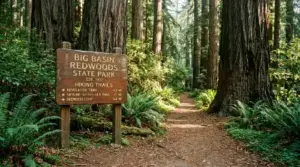
If you are planning a trip to Big Basin Redwoods State Park, keep these helpful tips in mind for an enjoyable, respectful visit:
- Book Parking Ahead: Visit the official California State Parks website to secure your day-use parking reservation prior to driving up Highway 236.
- Bring Adequate Water and Supplies: While temporary visitor amenities and portable restrooms are available, permanent concessions remain limited as reconstruction continues.
- Stay on Designated Trails: The surrounding forest floor is undergoing delicate natural regeneration; staying on established trails prevents soil compaction and protects young seedlings.
- Practice Leave No Trace: Pack out all trash, respect wildlife habitats, and support local mountain businesses in nearby Boulder Creek and Felton during your visit.
Conclusion
Big Basin Redwoods State Park is far more than a collection of ancient trees—it is a living symbol of ecological endurance, community devotion, and forward-thinking conservation. As expanded park boundaries like the NoraBella property secure vital watershed corridors and new sustainable trails open to the public, Big Basin stands as a testament to what thoughtful stewardship can achieve. Whether you are a lifelong mountain resident or a first-time visitor, exploring Big Basin today offers a rare, inspiring opportunity to watch a legendary forest rebirth itself for generations to come.