
In the wake of catastrophic wildfires across Northern California, property owners throughout the Santa Cruz Mountains and coastal valleys have faced a double crisis: mitigating real-world wildfire threats and navigating an unprecedented homeowner insurance crunch. Today, landmark community action is turning the tide, delivering both environmental protection and financial relief to local residents.
A Major Milestone: State Fire Risk Reduction Community Status
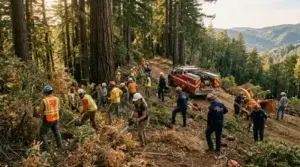 The California Board of Forestry and Fire Protection officially added Santa Cruz County to the state’s coveted Fire Risk Reduction Community List. Coordinated through the Santa Cruz County Office of Response, Recovery & Resilience (OR3) in partnership with the Community Development & Infrastructure Department, CAL FIRE, local fire districts, and the Resource Conservation District of Santa Cruz County, this official designation certifies that the region meets stringent state standards for wildfire planning, public education, and fuels management.
Achieving this recognition is far more than a symbolic victory. For communities still rebuilding and adapting years after the devastating 2020 CZU Lightning Complex Fire, the certification unlocks two critical advantages:
- Mandatory Insurance Discount Eligibility: Under California’s “Safer from Wildfires” framework, insurance carriers doing business in California are required to offer premium discounts to policyholders living in state-recognized Fire Risk Reduction Communities or certified Firewise USA neighborhoods.
- Priority Access to State Grant Funding: The designation elevates Santa Cruz County’s priority ranking when competing for millions of dollars in CAL FIRE Wildfire Prevention Grants. These funds directly back local fuel breaks, neighborhood chipping drives, roadside vegetation clearing, and community safety mapping.
Understanding “Safer from Wildfires”: The Three Layers of Protection
Enacted by the California Department of Insurance under Insurance Commissioner Ricardo Lara, the Safer from Wildfires regulation enforces a ground-up approach to disaster resilience. To maximize potential insurance discounts, homeowners are encouraged to combine community-level designations with property-level mitigation across three distinct layers:
1. Protecting the Structure (Home Hardening)
Embers blown by high winds cause up to 90% of home ignitions during a wildfire. Retrofitting vulnerable structural elements significantly lowers risk:
- Class-A Fire-Rated Roofs: Ensuring roofs are made of fire-resistant materials such as asphalt composition shingles, tile, or metal rather than untreated wood shake.
- Ember-Resistant Vents: Installing non-combustible 1/16-inch to 1/8-inch corrosion-resistant metal mesh screens over attic, crawlspace, and foundation vents to stop windblown embers from entering.
2. Protecting the Immediate Surroundings (Defensible Space)
The immediate zero-to-five-foot zone around a foundation—often referred to as the “ember-resistant zone”—is vital for home survival.
- The 5-Foot Non-Combustible Zone: Replacing flammable bark mulch, dry shrubs, or wood fencing directly attached to the home with decomposed granite, gravel, river rock, or metal gates.
- Zone 1 & 2 Maintenance: Clearing dead vegetation, limbing tree branches up at least 6 to 10 feet from the ground, and maintaining horizontal spacing between shrub canopies out to 100 feet from all structures.
3. Protecting the Community (Local Action)
Individual home hardening is most effective when entire neighborhoods participate. Residing in an officially designated Fire Risk Reduction Community like Santa Cruz County fulfills the overarching community protection tier required by many top insurance providers.
How Santa Cruz County Homeowners Can Claim Insurance Discounts
While state designation establishes community eligibility, insurance discounts are applied policy-by-policy. Residents—including those currently covered under the California FAIR Plan—should follow these steps to request rate reductions:
- Gather Official Proof: Access the Santa Cruz County Office of Response, Recovery & Resilience (OR3) portal to download the official documentation verifying Santa Cruz County’s placement on the Board of Forestry’s Fire Risk Reduction Community List.
- Contact Your Insurance Agent or Provider: Submit the proof of community designation to your carrier and ask specifically: “Does your company offer discounts for living in a state-certified Fire Risk Reduction Community under California’s Safer from Wildfires regulation?”
- Document Property Hardening Upgrades: Take clear, date-stamped photos of your home hardening improvements—such as metal vent screens, Class-A roofing, and cleared 5-foot non-combustible perimeters. Providing proof of both individual property hardening and community designation opens the door to cumulative discounts.
- Participate in Local Chipping Programs: Take advantage of neighborhood green waste drop-offs and low-cost Chipper Programs sponsored by local fire protection districts to maintain compliant defensible space year-round.
Community-Wide Defense: Grants, Fuel Breaks, and Public Safety

Beyond individual policy relief, the state designation acts as a major engine for municipal infrastructure investment. Prioritized grant funding allows county agencies, local Fire Safe Councils, and fire districts to accelerate vital wildfire mitigation infrastructure:
- Strategic Shaded Fuel Breaks: Constructing managed vegetation buffers along critical evacuation routes, such as Highway 9, Highway 17 corridors, and mountain ridge roads.
- Community Chipping & Green Waste Operations: Funding free or subsidized curbside limb chipping for rural mountain property owners to dispose of excess brush without outdoor burning.
- Advanced Risk Mapping & Early Warning: Enhancing local GIS wildfire hazard mapping and expanding public alert systems to streamline rapid evacuations during red flag weather conditions.
Conclusion: Building a Safer, More Resilient Santa Cruz County
Earning the Fire Risk Reduction Community designation marks a significant leap forward in Santa Cruz County’s long-term wildfire recovery and adaptation journey. By pairing community-wide forestry management with property-level home hardening, local residents can protect their homes, preserve mountain ecosystems, and secure meaningful financial relief on property insurance. Take action today by contacting your insurer, auditing your defensible space, and taking full advantage of county resilience resources.